Example Of A Formal Letter . Martin haynes or dear ms. Most formal letters are no more than one typed page. 35 Formal / Business Letter Format Templates & Examples ᐅ TemplateLab from templatelab.com Here are the rules in proper formal letter writing. My name is john treece; Definition of a formal letter.
Uvm Start_Item Example. Doing type overrides by instance is (i think) conceptually intended for instances of classes that derive from uvm_component, because they have a specific hierarchical path. Different from the simple adder testbench, this testbench does not have monitor nor driver, once what is being checked is the operation of the module refmod_low (written in systemc) in function of the operation of the refmod.
UVM Tutorial for Candy Lovers 4. Agent ClueLogic from cluelogic.com
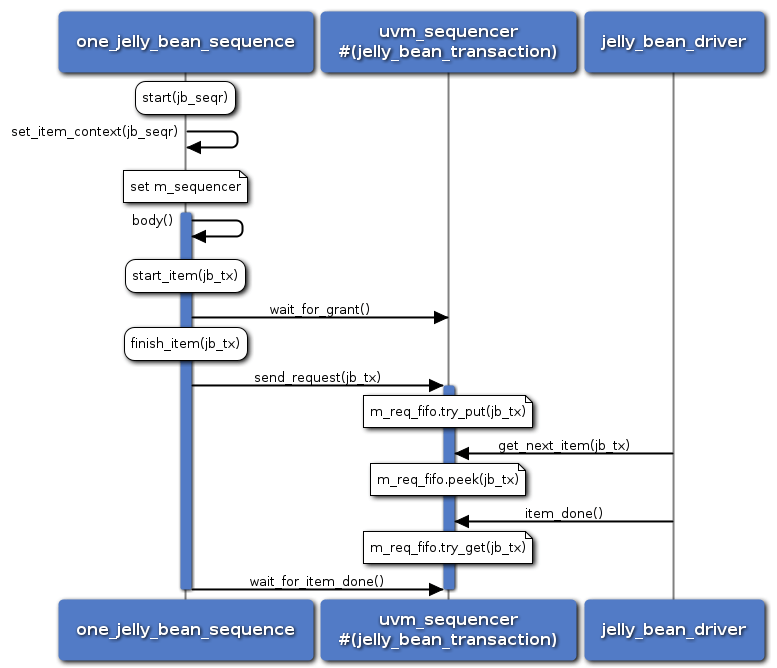
Start_item/finish_item is used to send transactions to a driver, and thus must be connected to a sequencer. These macros are uvm_create and uvm_send. Configuration can differ from one test to the another using a different configuration object for the same agent.
// Do Something Here With Req Finish_Item(Req);
Uvm provide two macros to do less typing… Below is the code for a typical uvm sequence: Uvm_reg_item extends uvm_sequence_item defines an abstract register transaction item.
From The Start_Item Launched By A Sequence, I Landed In Uvm_Base_Sequence.svh File Of Uvm Source Code.
Typical pattern for sequence body does 3 things: The start_item ends after calling pre_do method. (default type uvm_sequence_item) users can overwrite req and rsp to a different transaction type.
There Are Two Methods As Follows:
Again a sequence is a 'data item' its not a component. An agent configured to be active. Everything is fine in start_item as per my understanding but i don't see start_item calling send_request to the sequencer.
A Sequence Is Executed By Calling Its Start Method, Either Directly Or Invocation Of Any Of The `Uvm_Do_* Macros.
Another way to start a sequence item is to use start_item/finish_item. Set the default sequencer that should execute this sequence. Uvm_sequence is a parameterized class with req and rsp parameters of type uvm_sequence_item.
A Uvm_Sequence Is Derived From An Uvm_Sequence_Item.
You just need to use it. By the art of verification. If the driver uses the begin_tr / end_tr api in uvmcomponent, the sequence can wait on the item’s end_event to block until the item was fully executed, as in the following example.


Comments
Post a Comment